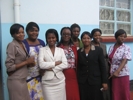
The school has a full time chaplain incharge of all spiritual matters affecting the pupils and staff, Pastor Nchimunya Siyumbu. The department also carries out guidance and counselling for pupils and staff. The following is the spiritual master plan of the chaplaincy department;
- 1. GOAL AND FOCUS
Kabwe Adventist School is committed to ensuring that children present at KAS should have a positive change of lifestyle during and after their school. All children need to be given a foundational knowledge to cope with life. They also they need to be involved in community and spiritual projects in order to prepare them for this life and the world to come.
The teachers and other members of the KAS family need spiritual maturity too. This can only be achieved through a spiritual master plan whose objectives are clearly outlined in this document.
- 2. AMENDMENTS
Any amendments to the objectives, or to the methods of implementation, should be referred to the Spiritual Affairs (Chaplaincy) Committee.
- 3. SPIRITUAL RESPONSIBILITIES
- Needs of the staff – the School Administration and the Chaplaincy Committee
- Needs of the pupils – the Chaplaincy Committee
- Needs of the community – School Administration and the Chaplaincy Committee
- 4. OBJECTIVES
The objectives shall be among other things to:
4.1 Ensure staff and pupils understand the Adventist Philosophy of Education and the Mission of the School.
4.2 Encourage staff and pupils to study and live by the Bible teachings and principles.
4.3 Ensure all workers are engaged in integration of faith and learning.
4.4 Produce a news letter that will help to change lives.
4.5 Learn leadership skills.
4.6 Organise baptisms.
4.7 Distribute Voice of Prophecy lessons and other literature.
4.8 Meet the spiritual needs of staff and pupils.
4.9 Foster good personal relationship with Jesus.
4.10 Encourage commitment to Seventh Day Adventist Christian lifestyle.
4.11 Guide staff and pupils to participate in spiritual activities by using their talents.
4.12 Support commitment to making a positive difference in the world – by outreach ministries, and by the witness at home and in the work place.
- 5. IMPLEMENTATION
5.1.1 Focus on the needs of the school.
5.1.2 Worship programs: Sabbath School, Visitations, Divine service, and music programs on selected Sabbaths.
5.1.3 Bible study.
5.1.4 Prayer sessions.
5.1.5 Voice of Prophecy Lessons.
5.1.6 Week of Prayer meetings.
5.1.7 Health Talks – videos, Power Point.
5.1.8 Outreach and Visitation.
5.1.9 Nature walks.
5.1.10 Counselling sessions.
5.1.11 Music Fellowship.
5.1.12 Workshops and Seminars.
5.2 FOCUS ON THE NEEDS OF THE STAFF
5.2.1 Daily worship.
5.2.2 Workshops and Seminars.
5.2.3 Prayers.
5.2.4 Music.
5.2.5 Retreats.
5.2.6 Staff visitation.
5.2.7 Staff outreach programs.
5.2.8 Staff counselling every Friday afternoon.
5.3 FOCUS ON THE NEEDS OF PUPILS
5.3.1 Worship in the classrooms before any lesson.
5.3.2 Distribution of old Sabbath School study guides and other spiritual materials.
5.3.3 Singing groups and programs, in-house and visiting groups.
5.3.4 Bible Study – Voice of Prophecy.
5.3.5 Prayer.
5.3.6 Cultural programs/day.
5.3.7 Pathfinders.
5.3.8 Camps.
5.3.9 Adventist Youth clubs and programs.
5.3.10 Counselling on issues such as dangers of drugs, premarital sex, pornography etc – every
Wednesday afternoon.
5.3.11 Evangelism through school assemblies.
5.4 FOCUS ON THE COMMUNITY
5.4.1 Branch Sabbath School and Crusades by the school.
5.4.2 Visitation to parents.
5.4.3 News letter/magazine to parents.
5.4.4 Participate in community events – sports, concerts, etc.
5.4.5 Prepare programs for the community such as cleaning the streets.
5.4.6 Visit other churches with choir from the Lower Section.
5.4.7 Ministerial Club visitations to other institutions and communities.